


To be fair, I did made quick good hits based on the information shared in the report written in 2008 :
a) breeding Golden Plover (Pluvialis apricaria) - this species was made very familiar with the non-breeding Pacific Golden Plover while in Borneo. The first sighting of this beautiful wader along route 863 to Tisnes had me hitting the brakes right in the middle of the road to the chagrine of other drivers behind me (lucky for me they were much further behind, they made a courteous signal left and overtook my dead stop car-glad to be in Norway). Later I made decent photos of the bird at a more suitable spot along a deserted road at Tisnes.
b) Common Ringed Plover (Charadrius hiaticula) - breeding colors, had photograph this earlier on a nest with eggs at Tungenes, Randaberg closer to home. They are a common species here in Norway/Europe.
c) Curlew (Numeneous arquata) - I have made some photos of this large wader in Jaeren and Sommevagen, Sola on home ground.
d) Redshank (Tringa totanus) - in full breeding colors, hoping for Spotted Redshank but was informed by a local that they are rare even in Tromso and only a few spotted locally. We had 4 individuals stalking the estuary near our rented house at Oldervik all week.
e) Pectoral Sandpiper (Calidris melanotos) - a lifer, apparent a rare find here as well. The www.artobservajoner.no listed repeated sightings of the 3 individuals report at Tisnes. Apparently everybody is taking their time to tick it off their list on a daily basis.
f) Black Guillemot (Cepphus grylle) - I was expecting many more, but max at probably 12 on the ferry to Vengsoya.
g) White-tailed Eagle (Haliaeetus albicilla) - a most magnificent view. We spotted it on the beach tearing up a gull. We probably just missed the dramatic attack sequence by mere minutes judging from the scattered feathers along the spot we saw it.
h) Ring Ouzel (Turdus torquatus) - a pair spotted along the road on Vengsoya as we were heading for the ferry terminal.
i) Willow Ptarmigan (Lagopus lagopus) - also spotted along the road as we were driving slowly towards the terminal on Vengsoya.
j) Red Knots (Calidris canutus) - about two hundred individuals roosting at high tide near Langnes by the airport in Tromso.
k) Dunlin (Calidris alpina) - in breeding colors along the roadside while driving to Oldervik.
l) Ruddy Turnstone (Arenaria interpres) - full breeding colors at Langnes.
Other birds were Black-backed Seagulls, Common Seagulls, Oystercatchers, 100s of Common Eiders, Grey Herons and 4 pairs of Red-breasted Merganser busy searching nest sites near Oldervik estuary.
As you can well judge from the list, it's not extensive, and I wanted more. After stumbling upon several more informative publications from University of Tromso on the birdlife in the northern counties, I've revised the places to hit on my next visit. May-June is best time to hit for waders. Winter is best for seaducks. These places are highlighted on the maps below.
Balsfjord : Kantornes, Kobbevagen south of Tromso. Knots in the 10,000s in May, late winter for seaducks. Raptors too attracted in spring.
Tisnes : waders and most importantly lekking Ruff. 30-40 pairs lekk amongst the cows in May and June! End of April and early June are best times to visit.
Langnes : this is closest to the city just across from Tromso airport terminal.
Rakfjordmyrene: north of Tromso on Kvaloya for wooper swans and phalaropes. Thousands of seaducks gather in winter across Kvalsundet. Up to 2000 King Eiders have been recorded here in winter.


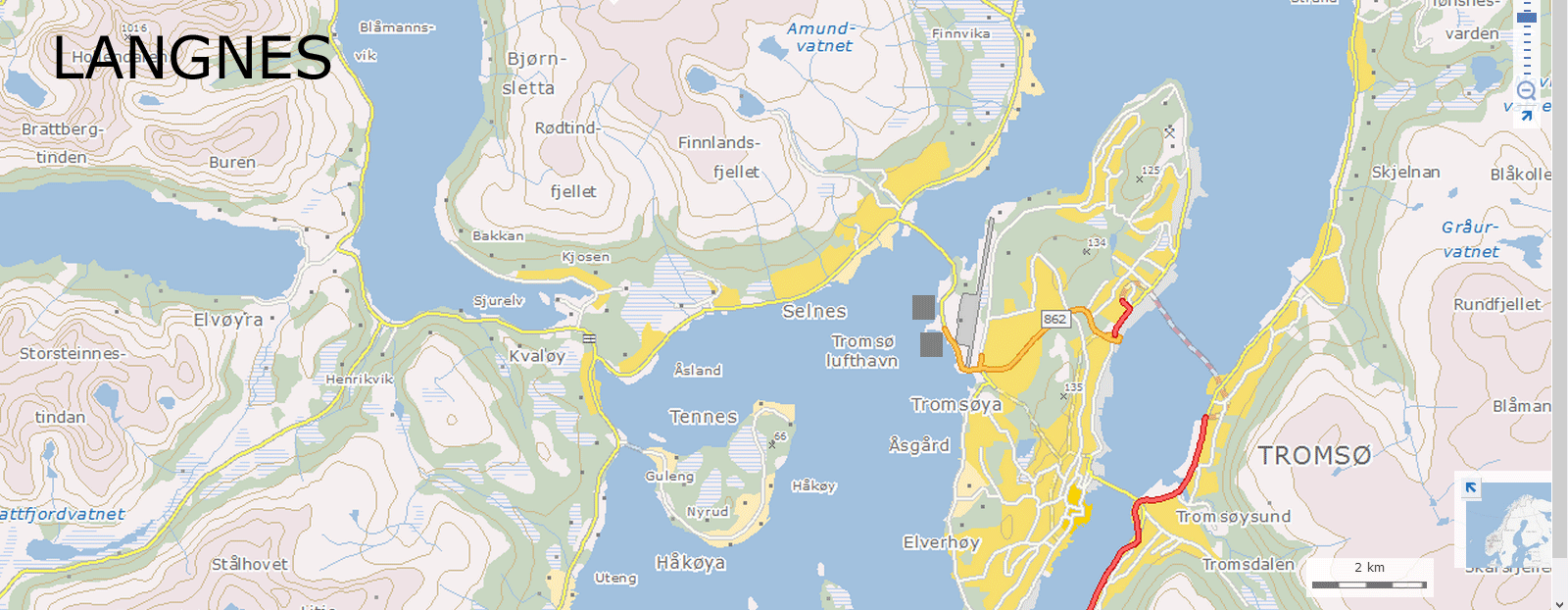

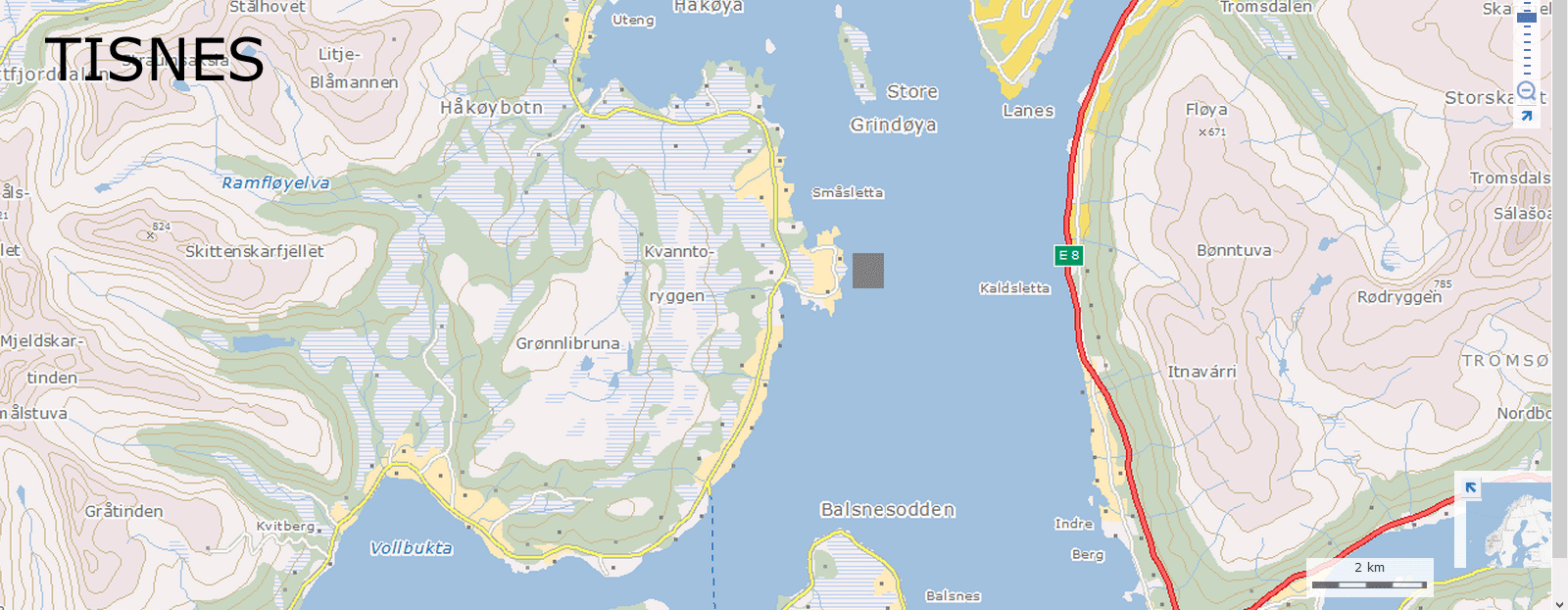
With another couple of days left of my Tromso birding tour, I will probably head down to Tisnes again for a last look see and venture south to Kobbevagen time permitting. The other sites will have to wait when I come back on a return revenge trip either Autumn 2013, definitely Winter 2014 and most likely again Spring 2014.
An unexpected turn of events this week ie. a busted left knee didn't make moving around any easier or me my jovial birder pain free self. Limping around bumpy fields isn't exactly fun with all the gear, even getting in and out of the car was a nightmare.
*UPDATE*
Thursday became a second rest day after it swelled due too much walking stalking the Red Knot at Langnes and the frequent getting in and out of the car the day before. We went out again on May day (Norwegian Constitution Day) this time all the way to Kobbevagen and made stops at Tisnes and Langnes on the way back.
Kobbevagen was an extensive mudflat, when we arrived it was low tide and and remained low until the time we left around noon. There were some Common Gulls, a couple of Redshank, several Oystercatchers. We can't be sure if there were other waders around. One good sighting was that of a Black-thoated Loon in the distance. The greyish head and back of the head nicely differentiated it from the Great Northern Loon I ticked off a few weeks ago from Harsfjord.
On the way back from Kobbevagen, we made a quick stop at Tisnes again. There were several other birders along the road. The pond by the horsefarm had one intent birder by it. He had this half satisfied look on his face, I knew immediately that he was onto something. Out of the 30-40 pairs said to lek in the area in a good season, I had the good fortune to finally see my first ever breeding Ruff!
On the way back to Oldervik we made a quick stop at Langnes to check on the Red Knot. Their numbers have now increased from Wednesday when we first saw the flock. Spooked, they were flying around trying to find a good spot to land. It finally landed right in front of where we were. They looked brilliant in the late afternoon light sporting their full rust breeding plummage. The last time I saw these were 3 individuals (also in breeding colors) Jun 2008 back in Kuala Baram.
The next day which was our last day in Troms, we made a leisurely drive down to Balfjord around Kantornes, Sorbotn and Kristoffjord. At Sorbotn we saw a pair of White-throated Diver. That was the best conclusion of our maiden trip to Tromso. With both Ruff and diver in the bag, about the only thing to do now is plan for a come back trip.
m) Black-throated Loon (Gavia arctica)
n) Ruff (Philomarcus pugnax) - dream come true
o) Common Scoter (Melanitta fusca) - have only seen them once off Revtangen, Jaeren
p) White-throated Diver (Cinclus cinclus) - dream come true
q) Common Sandpiper (Actitis hypoleucos) - a pair at Sorbotn
r) Common Pochard (Aythya ferina) - last I saw this was somewhere in Groningen, NL


*END OF UPDATE*
One lesson learnt ... you can't rush on research and get local knowledge as best as and as soon as you can. It's always good to check with experts in the area, in this case publications I acquired at the Tromso Museum which took place on day 4. Most useful as well is perhaps www.artobservajoner.no which records sightings for the whole of Norway and you can filter counties, dates etc for particular periods your interested in.
All and all, it's an okay trip as far as maiden trip goes, Feb 2014 will be better for the seaducks. I can predict that May/Jun 2014 will just be astounding!


