Pages

Monday, August 12, 2013

The stretch between Kvassheim Fyr and Brusand

We took a drive to Kvassheim Fyr one fine sunny Saturday with the children to show them the lighthouse as well as the very quiet white sandy beach just south of the Kvassheim Fyr and slightly north of Brusand.

We walked through pastures with several dairy cows meandering at a leisurely pace or were just chewing cud in the sun.We passed through what seemed like a typical coastal agricultural land typical of the Jaeren landscapes.

Along the way there were several species of birds amongst them the most ubiquitous were the European Starlings, Oystercatchers, Gulls sp and Northern Lapwings. On the beach were the occasional Ruddy Shelduck, Common Eider, Common Ringed Plover and Dunlin.

The walk was slightly prolonged however we reached the beach in good time before the kids reached their threshold of bucolic scenery overdose. We were the only one at the beach that day aside from a family of four which turned up later and a couple of walkers and their dogs passing though. Even the birds seemed absent except those on a distant little island just slightly out in the water.

There were Oystercatchers and Gulls of course. On this trip we discovered nestlings of a pair of Oystercatchers right on the beach. They must not have been more than a couple of weeks old by their downy appearance. Both parents were most protective of their charge protecting them vehemently against flybys by seagulls (likely predator) and unsuspecting walkers; they did this my directly mobbing the gulls and making really loud noises again passers by.

We counted 3 downy youngs looking comical on their unpropotionately spindly legs moving in accordance to the instructions of their parent. The minute danger was identified, an alarm call was made out and the little fuzzy things would immediately assumed the frozen position flat on the ground; their coloration blended well with the beachscape with all the sand, small well eroded rocks and dried up kelp and seaweeds.

Their utter trust in their parent's judgement call would see them frozen to the ground immobile even when we were less than five feet away from them. An unuspecting eye would not notice their presence. However a dog's keen sight and sense of smell would probably spell the summary end of the little baby Oystercatcher.


Kvassheim Fyr sunset, there are birds all along the coast.

A few weeks old downy Oystercatcher in great camouflage on the beach.

Common blooms on the coastal pasture.

A pair of Ruddy Shelduck commonly seen in the area.

Waders are a common sight on the beach; Jaeren coast is an important waypoint for migrating waders moving North in spring and again South in the autumn. Some birds also breed here on the coast. Common Ringed Plover breeds here.

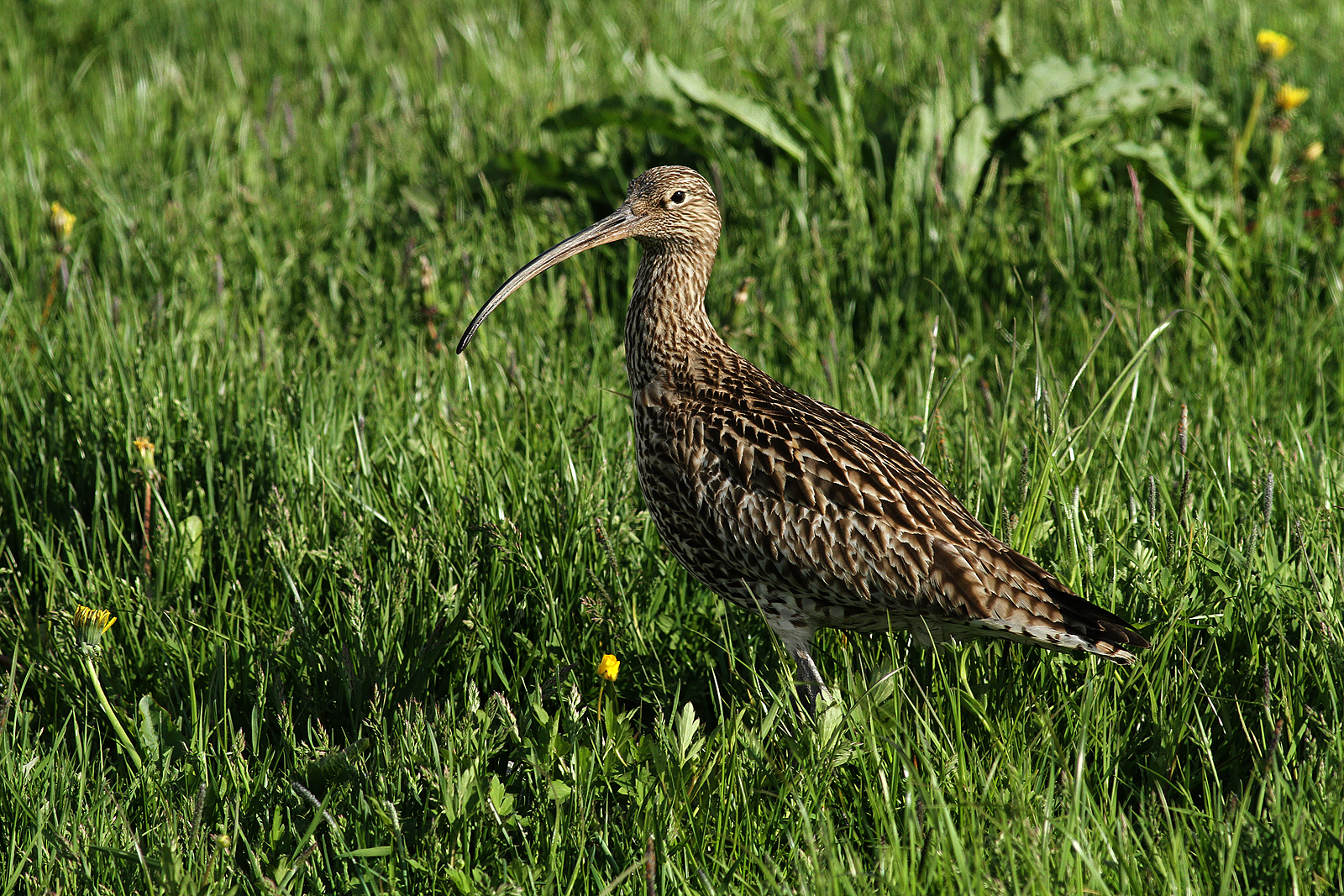
Eurasian Curlew, one of the breeders in Jaeren.

Oystercatchers are also breeders in the area.

Many shorebirds nest and rear their young in such open environment. This is common in the Jaeren landscape and elsewhere. Unfortunately some of these places are also popular with nature lovers, walkers and their dogs. In most places where breeding birds and their young are vulnerable to predation, signs are put up to warn visitors to put their dogs on leash between April and September. Some places go even further by putting these sensitive places completely offlimits to visitors to ensure successful breeding and safety of the young birds.

Most times there are no enforcement, rather good judgement on the parts of the visitors.

Nazeri Abghani, Jun 2013

Friday, June 7, 2013

Breeding Curlew at Obrestad


A pair of Curlew (perhaps breeding) was photographed along the secondary road into Obrestad just past the school in a field of grass. They were rather obliging and photos were made from inside a car while parked in the middle of the road. Images were captured using the 400/5.6 lens, the bigger lens proved to unwieldy in the current car ... both size of lens and maneuverability space were main detractors.

Sunday, May 26, 2013

Short waderwatching Telecommunication Museum Naerlande

I didn't get my fill of 10,000 waders while at Tromso, so had to go out again searching for waders this morning.

The day before I was at Tungenes Fyr, Randaberg for a short while. The wind was very strong, the only birds seen hanging around were the gulls and they were having a great time soaring with the coastal gusts. There was also a pair of Common Ringed Plover from last year at their usual nest site.

Today I drove directly to Revtangen via Sola-Olderberg-Vigdel-Bore, noticed a few Common Velvet at the beach in Sola as I was passing by the airport. There weren't anything significant along the way in the fields along the way either.

At Revtangen there were several cars parked at the harbour, the beach was quiet other than a woman walking on the rocky side of the beach with two dogs unleashed. There were no birds at the usual spot except for a gull and two cormorants which were quickly spooked by the two dogs. Two Common Eider were seen playing in the surf on the sandy side of the beach. Other than that I didn't notice any waders. The wind wasn't too strong however the tide was high and there were some moderate wave action. I did not notice anything further out at sea. There have been some sightings of very interesting seabirds the past couple of days at this very spot.

Naerlande

My next stop was the beach at Naerlande just past the Telecommunication Museum. I tried a path along the fields and ended up on a sandy beach. There were several Common Ringed Plover there ... at least 20 and several Dunlin in breeding plumage. I haven't seen one with the black belly patch close up before, the rust orange mantel of summer plumage was very nice in the sun.

The waders were spooked quickly as I moved for a closer shot. At 14 deg C, I was feeling rather chilly in my light summer  pullover ... sunny doesn't mean it's warm in Norway especially if there a breeze.

Oystercatcher / Tjeld / Haematopus ostralegus

Common ringed Plover / Sandlo / Charadrius hiaticula 

Shelduck / Gravand / Tadona tadorna

Arctic Tern / Rodnebbterne / Sterna paradisaea


Dunlin / Myrsnipe / Calidris alpina


On the way back to the parking spot, took a shot of a Shelduck sitting contently on his rock. He's been here the numerous times I've visited this beach. Today there was also a tern, we one a tern as well when I last came here in March with Neil and Inger. This it's resting on a rock was quite happy with itself. I managed a few shots before it flew off. I think it's an Arctic Tern ... the bill clearly does not have a black tip and it has the two long streamers of a tail.

Barnacle Goose / Hvitkinngas / Branta leucopsis 


Nearby the spooked waders earlier had found a spot to forage, I had a second chance at the Dunlin.

Though the sun was starting to come out again, the wind was still blowing moderately. I decided to leave it for now ... will explore the spot again another day. This place is a popular walking area with paths going around all over the place, photography might be a tad challenging.

Thursday, May 16, 2013

Birding Hot spots in Troms

After weeks of researching for my maiden birding trip to the north, I made the classic mistake of relying on a single seemingly complete source of reference by google searching "birdwatching tromso". The dearth of electronic material on the web about where to birdwatch also compounded the issue (dearth = lack of English references since Jeg snakker litt Norsk!). So there I was equipped with a trip report made by another foreign birder on a whirlwind tour poised to tick off the list of my dreams ... to my dismay.


To be fair, I did made quick good hits based on the information shared in the report written in 2008 :

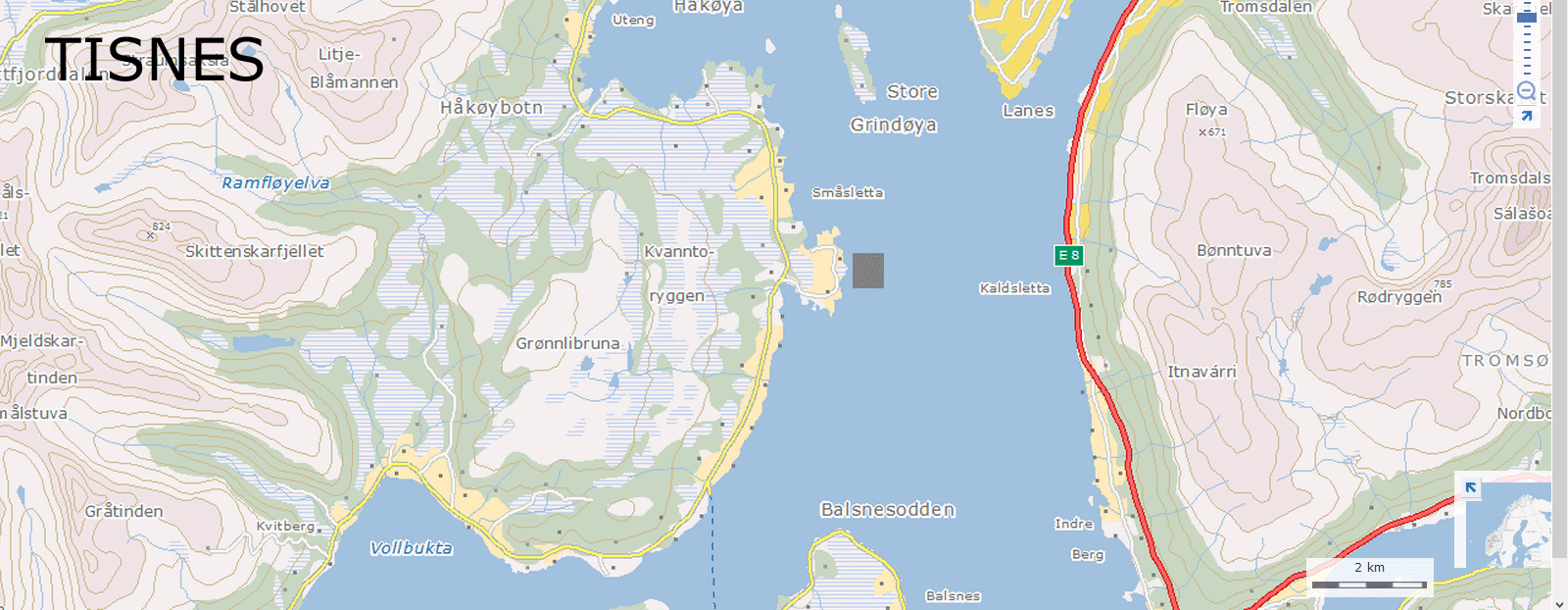
a) breeding Golden Plover (Pluvialis apricaria) - this species was made very familiar with the non-breeding Pacific Golden Plover while in Borneo. The first sighting of this beautiful wader along route 863 to Tisnes had me hitting the brakes right in the middle of the road to the chagrine of other drivers behind me (lucky for me they were much further behind, they made a courteous signal left and overtook my dead stop car-glad to be in Norway). Later I made decent photos of the bird at a more suitable spot along a deserted road at Tisnes.
b) Common Ringed Plover (Charadrius hiaticula)  - breeding colors, had photograph this earlier on a nest with eggs at Tungenes, Randaberg closer to home. They are a common species here in Norway/Europe.
c) Curlew (Numeneous arquata) - I have made some photos of this large wader in Jaeren and Sommevagen, Sola on home ground.
d) Redshank (Tringa totanus) - in full breeding colors, hoping for Spotted Redshank but was informed by a local that they are rare even in Tromso and only a few spotted locally. We had 4 individuals stalking the estuary near our rented house at Oldervik all week.
e) Pectoral Sandpiper (Calidris melanotos) - a lifer, apparent a rare find here as well. The www.artobservajoner.no listed repeated sightings of the 3 individuals report at Tisnes. Apparently everybody is taking their time to tick it off their list on a daily basis.
f) Black Guillemot (Cepphus grylle) - I was expecting many more, but max at probably 12 on the ferry to Vengsoya.
g) White-tailed Eagle (Haliaeetus albicilla) - a most magnificent view. We spotted it on the beach tearing up a gull. We probably just missed the dramatic attack sequence by mere minutes judging from the scattered feathers along the spot we saw it.
h) Ring Ouzel (Turdus torquatus) - a pair spotted along the road on Vengsoya as we were heading for the ferry terminal.
i) Willow Ptarmigan (Lagopus lagopus) - also spotted along the road as we were driving slowly towards the terminal on Vengsoya.
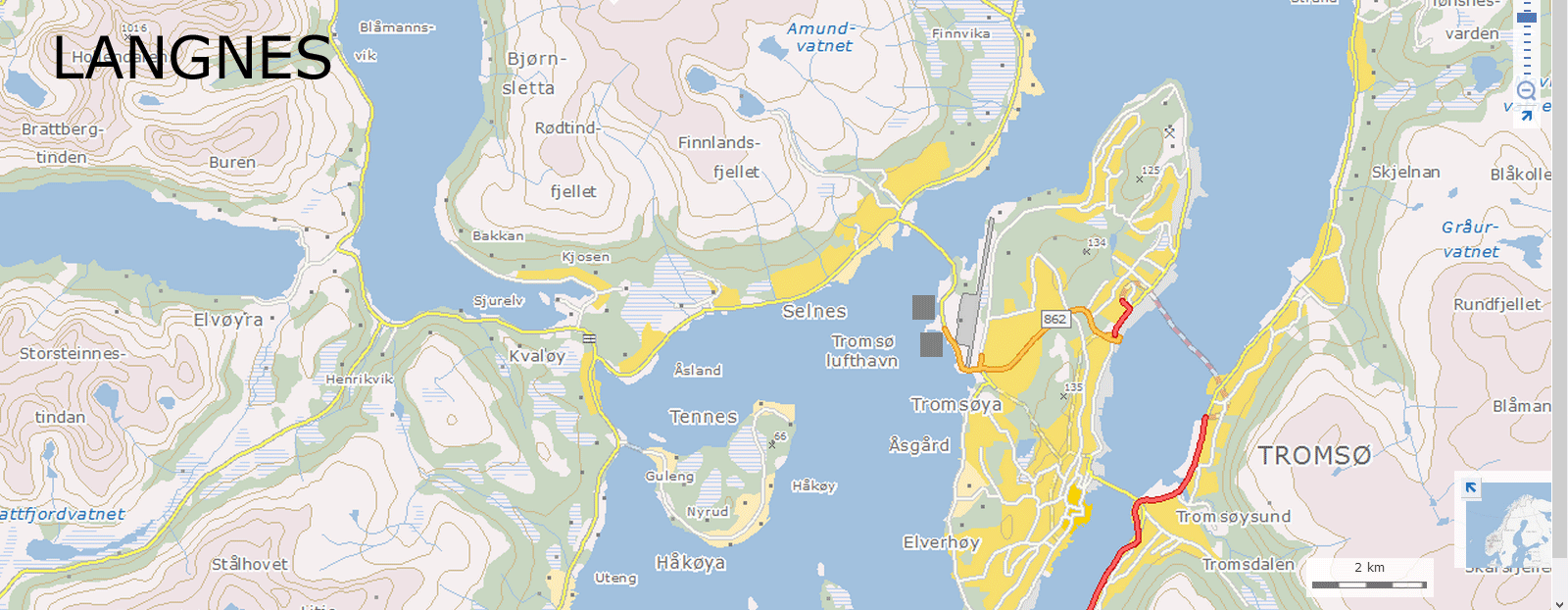
j) Red Knots (Calidris canutus) - about two hundred individuals roosting at high tide near Langnes by the airport in Tromso.
k) Dunlin (Calidris alpina) - in breeding colors along the roadside while driving to Oldervik.
l) Ruddy Turnstone (Arenaria interpres) - full breeding colors at Langnes.

Other birds were Black-backed Seagulls, Common Seagulls, Oystercatchers, 100s of Common Eiders, Grey Herons and 4 pairs of Red-breasted Merganser busy searching nest sites near Oldervik estuary.

As you can well judge from the list, it's not extensive, and I wanted more. After stumbling upon several more informative publications from University of Tromso on the birdlife in the northern counties, I've revised the places to hit on my next visit. May-June is best time to hit for waders. Winter is best for seaducks. These places are highlighted on the maps below.

Balsfjord : Kantornes, Kobbevagen south of Tromso. Knots in the 10,000s in May, late winter for seaducks. Raptors too attracted in spring.

Tisnes : waders and most importantly lekking Ruff. 30-40 pairs lekk amongst the cows in May and June! End of April and early June are best times to visit.

Langnes : this is closest to the city just across from Tromso airport terminal.

Rakfjordmyrene: north of Tromso on Kvaloya for wooper swans and phalaropes. Thousands of seaducks gather in winter across Kvalsundet. Up to 2000 King Eiders have been recorded here in winter.


With another couple of days left of my Tromso birding tour, I will probably head down to Tisnes again for a last look see and venture south to Kobbevagen time permitting. The other sites will have to wait when I come back on a return revenge trip either Autumn 2013, definitely Winter 2014 and most likely again Spring 2014.

An unexpected turn of events this week  ie. a busted left knee didn't make moving around any easier or me my jovial birder pain free self. Limping around bumpy fields isn't exactly fun with all the gear, even getting in and out of the car was a nightmare.

*UPDATE*

Thursday became a second rest day after it swelled due too much walking stalking the Red Knot at Langnes and the frequent getting in and out of the car the day before. We went out again on May day (Norwegian Constitution Day) this time all the way to Kobbevagen and made stops at Tisnes and Langnes on the way back.

Kobbevagen was an extensive mudflat, when we arrived it was low tide and and remained low until the time we left around noon. There were some Common Gulls, a couple of Redshank, several Oystercatchers. We can't be sure if there were other waders around. One good sighting was that of a Black-thoated Loon in the distance. The greyish head and back of the head nicely differentiated it from the Great Northern Loon I ticked off a few weeks ago from Harsfjord.

On the way back from Kobbevagen, we made a quick stop at Tisnes again. There were several other birders along the road. The pond by the horsefarm had one intent birder by it. He had this half satisfied look on his face, I knew immediately that he was onto something. Out of the 30-40 pairs said to lek in the area in a good season, I had the good fortune to finally see my first ever breeding Ruff!

On the way back to Oldervik we made a quick stop at Langnes to check on the Red Knot. Their numbers have now increased from Wednesday when we first saw the flock. Spooked, they were flying around trying to find a good spot to land. It finally landed right in front of where we were. They looked brilliant in the late afternoon light sporting their full rust breeding plummage. The last time I saw these were 3 individuals (also in breeding colors) Jun 2008 back in Kuala Baram.

The next day which was our last day in Troms, we made a leisurely drive down to Balfjord around Kantornes, Sorbotn and Kristoffjord. At Sorbotn we saw a pair of White-throated Diver. That was the best conclusion of our maiden trip to Tromso. With both Ruff and diver in the bag, about the only thing to do now is plan for a come back trip.

m) Black-throated Loon (Gavia arctica)
n) Ruff (Philomarcus pugnax) - dream come true
o) Common Scoter (Melanitta fusca) - have only seen them once  off Revtangen, Jaeren
p) White-throated Diver (Cinclus cinclus) - dream come true
q) Common Sandpiper (Actitis hypoleucos) - a pair at Sorbotn
r) Common Pochard (Aythya ferina) - last I saw this was somewhere in Groningen, NL


*END OF UPDATE*

One lesson learnt ... you can't rush on research and get local knowledge as best as and as soon as you can. It's always good to check with experts in the area, in this case publications I acquired at the Tromso Museum which took place on day 4. Most useful as well is perhaps www.artobservajoner.no which records sightings for the whole of Norway and you can filter counties, dates etc for particular periods your interested in.

All and all, it's an okay trip as far as maiden trip goes, Feb 2014 will be better for the seaducks. I can predict that May/Jun 2014 will just be astounding!

Sunday, May 5, 2013

Purple Sandpiper at Tungeneset

Went out on a hunch to Tungenes Fyr, Randaberg this morning. Wader season should be starting soon, why not go check out some places near to home. So far it's proven that season's starting late this year ... Lista and other sites closer hasn't revealed much in terms of waders.

So off I went equipped with the scope set up and the trusty 400/5.6. And I wasn't dissappointed. After almost a year in Norway, I finally saw my Purple Sandpiper.

From Wikipedia,

"Adults have short yellow legs and a medium thin dark bill with a yellow base. The body is dark on top with a slight purplish gloss and mainly white underneath. The breast is smeared with grey and the rump is black. They measure 20–22 cm (7.9–8.7 in) in length and 42–46 cm (17–18 in) across the wings, and weight is from 50–105 g (1.8–3.7 oz).[2]
Their breeding habitat is the northern tundra on Arctic islands in Canada and coastal areas in Greenland and northwestern Europe. They nest on the ground either elevated on rocks or in lower damp location. The males makes several scrapes; the female choose one and lays 3 or 4 eggs. The male takes the major responsibility for incubation and tends the chicks. The young feed themselves."


Purple Sandpiper / Fjaereplytt / Calidris maritima


The nice part was that these birds weren't as easily spooked as some of the other waders I've observed, they were tolerating my presence long enough to make some proper shots of them. I actually followed a flock as it foraged along the rocky shores passed the lighthouse. I was glad that when they finally all took off, it was the dog that scared them away. It was an exhilarating morning to say the least.

Saturday, April 20, 2013

Local patch : Coastal Jaeren

I consider myself to be extremely lucky to have been flung to Stavanger, Norway in the middle of Rogaland and the midst of birding haven that is Jaeren. Birding hotspots I only used to read about before can now be reached by less than a hour's leisurely driving.

Better still was to have made connection with a couple of avid local birders such as Neil and Inger Friestad, and their daughter Hera. Not long after we made contact at Sandness Havn while checking out ducks, we went on an introduction trip around local patch around Stavanger. Not long after that we covered coastal Jaeren. It was great fun zipping through the countryside getting the lowdown on the specialties of some of these hotspots with passionate birders having first hand knoowledge.

Ali and I drove from Stavanger one Saturday morning and within one hour we were birding with Neil, Inger and Hera. See map attached.

Jaeren coastal hotspots.


From the south we covered:
Sirevag 
Bruvatnet - several spots for waterbirds, wintering ducks and dipper
Kvassheim Fyr -waders and ducks
Madland -waders and waterbirds
Grodaland -passerines around a manmade lake in the woods
Obrestad - waterbirds and waders
Hatangen -waterbirds and waders
Soylandvatnet -wintering ducks, waterbirds, passerines in summer
Orrevatnet
Revtangen
Grudavatnet

Over the years many interesting sightings have been made in all these areas. Since most of the sites are located close to the coast, many waterbirds, seabirds, waders, raptors form the bulk of those sightings. Jaeren lies along the migration route North, with a point closest to UK landmass being Reve, migrant passerines are also a major feature. A ringing station managed and manned by the Stavanger Museum is located in Reve, just a few hundred meters from Revtangen.

With local patch covered (previous article) and now having completed introduction to coastal Jaeren, all that is left to do is find to find suitable weekends to stalk these sites for the birds. There are surely plenty of birds to go around all year, the trick around here is probably a day sunny enough the drag the gear out ... that there lies the challenge.

Sunset at Kvassheim, next to spot where ducks, and waders hangout.

Godwits by Hatangen, large fields dominated the landscape along the beach.

Goose in the fields next to Orrevatnet, the biggest bird magnet in the area.

Breeding curlew in the fallow fields of Obrestad, also by the coast.

Many thanks to Neil, Inger and Hera to have taken the trouble to show us around their patch, as well a Saturday moning's crash course on birding in Jaeren.

Nazer Abghani/Jul2013 (belated write up)