Pages

Wednesday, August 21, 2013

Some recent pictures at Reve

Spent half a morning at Reve with Neil Friestad amidst waders a week earlier at Reve. It was fabulous ... there were first and foremost the thousands of waders feeding amongst the washed up kelp; and then of course there were other birders too. I took a day off work and returned to the same spot mid-week to make a few more intimate pictures with the 600mm this time thinking that no one else would be sitting on a beach watching birds midweek. Wrong!

Along the way to the beach, I bumped into a birder who's been there since 5am and had counted 800+ Ruff roosting in the fields; he was already on his way out by the time our path crossed at about 9am. On the beach there were two other birders stalking raptors in complete camo gear, ghilly suit and all. I went ahead and sat across from where they were.

How was I supposed to know that there were stalking raptors?

I've always complained about other people stumbling into my viewfinder when I'm on a shoot; and here I was making the same dumb mistake. Perhaps we all should carry placards or something stating our intention. "Stalking Raptors!" or maybe some sort of color flag. Red-Do not approach, important stalking in progress. Orange-Approach with caution. Green-Safe zone. These flags should be stuck in the ground with metal stakes with an arrow pointing to where the photographers were.

After a long futile wait, one of photographers decided to abandon raptors completely and focus on Ruddy Turnstone up close and slowly crawled his way towards me. By noontime he had reached where I was. We broke into a friendly conversation, I felt sorry for both of them. One left for lunch and I decided to not completely wreck the other guy's chance of an uber raptor shot so I moved around and shot from his flank instead. We continued like this for another hour or so ... no raptors but I took plenty of close-up shots of Dunlin, Bar-tailed Godwit, Ruff, Red Knot, and Common Redshank, Sanderling, and Ruddy Turnstone.

Waders don't really give a toss of their main agenda to simply feed. Raptors however are a bit more cautious; they are stalking the waders. Waders would flit in and out to the same spot upon identification of threat. Raptors won't even bother making a swoop.

I consoled myself that I did not completely ruined the other guy's day. When I left he was still at it ... hopefully he got his killer shot.

Upon leaving the spot, I bumped into another birder on his way in with a big lens, looking for his killer shot no doubt. And this was Wednesday mind you ...


Dunlin / Myrsnipe / Calidris alpina


Red Knot / Polarsnipe / Calidris canutus


Little Stint / Dvergsnipe / Calidris minuta


Ruff / Brushane / Philomachus pugnax


Bar-tailed Godwit / Lappspove / Limosa lapponica

It's great to be in the field and commune with nature, mano-a-10,000 waders but in a place as important and popular as Jaeren that might be a little difficult to achieve. Shooting weekdays might be a better idea than Sunday for example. Shooting in not so perfect weather could also be alternative. Shooting early probably isn't even a good idea cause most birders rise early anyway. Saturday morning could be a hit and miss sometimes ...

And not to forget, these beaches are also public places. There'd be surfers, frolickers, pensioners, walkers and their dogs on the beach enjoying nature as you do especially on a great warm sunny summers day!

Images and Text: Nazeri Abghani/Aug 2013

Saturday, August 17, 2013

Birding Saturday : Three Autumn Wader Migration Jaeren Hotspots

First Stop : Naerlandestranda

From Sola, it's probably less than 20 minutes drive to Naerlandestranda on the coastal Nordsjo road. If you are driving south follow the signboard and make a turn left at the Telekom Museum sign. You can drive the car all the way to the beach and park.

This place was hot in winter for ducks, and spring and autumn for the migrants. Upon arrival, I was startled by a feeding Peregrine Falcon ... where there is prey, obviously there'd be predator, the falcon probably the main species here on the coast of Jaeren. They are magnificent to see.

From the coast, Oystercatchers can be heard and barely seen slightly off the beach flying inches above the wave rushing to their wintering grounds further south.

On the beach itself, the quarry were  scattered on the sands frantically feeding, now and again nervously taking off in flight, returning again when feeling more secure. Amongst waders at the beach were Dunlin, Common Ringed Plover, Red Knot, Ruff, Bar-tailed Godwit and Redshank. Most are young birds with their fresh looking plumage, most adults have most likely taken up the journey south a couple of weeks earlier ... there still are a few straggler adults now and again.

Winter months could prove Naerlandestranda to be productive for ducks. Last winter I ticked Velvet Scoter and Long-tailed Duck here, the come and play quite close to the shore. Other usual suspects like the Ruddy Shelduck and Common Eider are also common. One big advantage of the colder months is that there are less people on the beach. Walking is a big past time here, there's always someone with a dog walking someplace.

Easy parking spots (P) and potentially productive places to peek at the birds. Come Spring (May/Jun) and Autumn (Aug/Sep) these sites are teeming with migrating waders. Arctic Terns are commonly seen as are Ruddy Shelduck, Long-tailed Ducks, Velvet Scoter and others.

Peregrine Falcon.

The northern section of Naerlandestranda still to be explored.

Waders undecided whether to stay or to go, round and round they go.

Young Mallards.

There are waders and ducks in the them dar rocks. The southern section.

Waders on the water, just arrived from their nocturnal roost. Orrevatnet is not 10 minutes away by car. Reminded me of Kpg Masjid Kuala Baram and the marshes just beyond the beach (probably all oil palm plantation now!).

Second stop : Orrevatnet

This freshwater lake is an important roosting site for waders and waterbirds alike. Every year droves of birders flock to this lake together with the ducks, waterbirds, shorebirds that use this site as main habitat or stopping over point.

A bird friendly farmer understood the drive and has allocated some space for parking on his property. The situation is now more orderly than it has been in the past, birders can just drive up from the main road and park their car nicely by the roadside in the space provided and walk leisurely by the hedges to the edge of the lake.

The lake's surface coverage is huge, there many not-so accessible points surrounded by farms, private road and properties. Egravatnet is nearby as well which just across the parking space.

In the summer and winters months the lake is busy with both migrants and vagrants.

Parking (P) is coveniently allocated by the property owner right by the side on the road. Birding side is then only a mere 10 minutes walk away ... with full access to all that Orrevatnet has to offer, at all times of the year. Many birders near and far flock to this very important site for waterbirds in Norway.

Little Gull.

Hundreds of Ruff roosting ready to move south.

Mallards in the air.

Arctic Tern.

Northern Lapwing.

Third stop : Reve

This is the Reve site that Jaeren is famous for. Located not 15mins from Orrevatnet, the area is surrounded by flat farmlands, undulating dunes, rocky and sand shores as well as isolated stunted shrubs. You can birdwatch for passerines, raptors, waders all in the same day given the right season. Raptors preying on waders, ducks and geese flying across to reach Orrevatnet, seabirds cruising the North Sea and little passerines making the leap from across the seas.

The site is popular with local and international birders alike and you can be sure that there's always a birder at the side. Though access can be a cumbersome walk for those without parking permits, there's plenty to see in the fields along the path to the beach. Even the little scrap of forest at the start of the path has been very fruitful for many a birder during the right time of the year.

There's limited free parking along the Nordsjo route just pass Revtangen, then the beach is but a 10min walk west along a private gravel road a working field. Another option is to pay an annual NOK500 maintenance fee to the property owner and park by the beach, saves a birder the walk over. Depending on how much gear you have with you you have the option to park and walk from Revtangen or Orrestranda.

Ruff in non-breeding plummage.

Bar-tailed Godwit on the rocks.

Young Red Knot about to be on the rocks.

Little Stint ... my first!

Wader galore.

Red Knot.

Young Red Knot so close you can almost touch!

Young scientist trapping and ringing the waders.

Thank you Neil Robert Jones Friestad for a whole morning of awesome Jaeren birding.

Words and images by Nazeri Abghani/Norway/Aug 2013

Monday, August 12, 2013

The stretch between Kvassheim Fyr and Brusand

We took a drive to Kvassheim Fyr one fine sunny Saturday with the children to show them the lighthouse as well as the very quiet white sandy beach just south of the Kvassheim Fyr and slightly north of Brusand.

We walked through pastures with several dairy cows meandering at a leisurely pace or were just chewing cud in the sun.We passed through what seemed like a typical coastal agricultural land typical of the Jaeren landscapes.

Along the way there were several species of birds amongst them the most ubiquitous were the European Starlings, Oystercatchers, Gulls sp and Northern Lapwings. On the beach were the occasional Ruddy Shelduck, Common Eider, Common Ringed Plover and Dunlin.

The walk was slightly prolonged however we reached the beach in good time before the kids reached their threshold of bucolic scenery overdose. We were the only one at the beach that day aside from a family of four which turned up later and a couple of walkers and their dogs passing though. Even the birds seemed absent except those on a distant little island just slightly out in the water.

There were Oystercatchers and Gulls of course. On this trip we discovered nestlings of a pair of Oystercatchers right on the beach. They must not have been more than a couple of weeks old by their downy appearance. Both parents were most protective of their charge protecting them vehemently against flybys by seagulls (likely predator) and unsuspecting walkers; they did this my directly mobbing the gulls and making really loud noises again passers by.

We counted 3 downy youngs looking comical on their unpropotionately spindly legs moving in accordance to the instructions of their parent. The minute danger was identified, an alarm call was made out and the little fuzzy things would immediately assumed the frozen position flat on the ground; their coloration blended well with the beachscape with all the sand, small well eroded rocks and dried up kelp and seaweeds.

Their utter trust in their parent's judgement call would see them frozen to the ground immobile even when we were less than five feet away from them. An unuspecting eye would not notice their presence. However a dog's keen sight and sense of smell would probably spell the summary end of the little baby Oystercatcher.


Kvassheim Fyr sunset, there are birds all along the coast.

A few weeks old downy Oystercatcher in great camouflage on the beach.

Common blooms on the coastal pasture.

A pair of Ruddy Shelduck commonly seen in the area.

Waders are a common sight on the beach; Jaeren coast is an important waypoint for migrating waders moving North in spring and again South in the autumn. Some birds also breed here on the coast. Common Ringed Plover breeds here.

Eurasian Curlew, one of the breeders in Jaeren.

Oystercatchers are also breeders in the area.

Many shorebirds nest and rear their young in such open environment. This is common in the Jaeren landscape and elsewhere. Unfortunately some of these places are also popular with nature lovers, walkers and their dogs. In most places where breeding birds and their young are vulnerable to predation, signs are put up to warn visitors to put their dogs on leash between April and September. Some places go even further by putting these sensitive places completely offlimits to visitors to ensure successful breeding and safety of the young birds.

Most times there are no enforcement, rather good judgement on the parts of the visitors.

Nazeri Abghani, Jun 2013

Friday, June 7, 2013
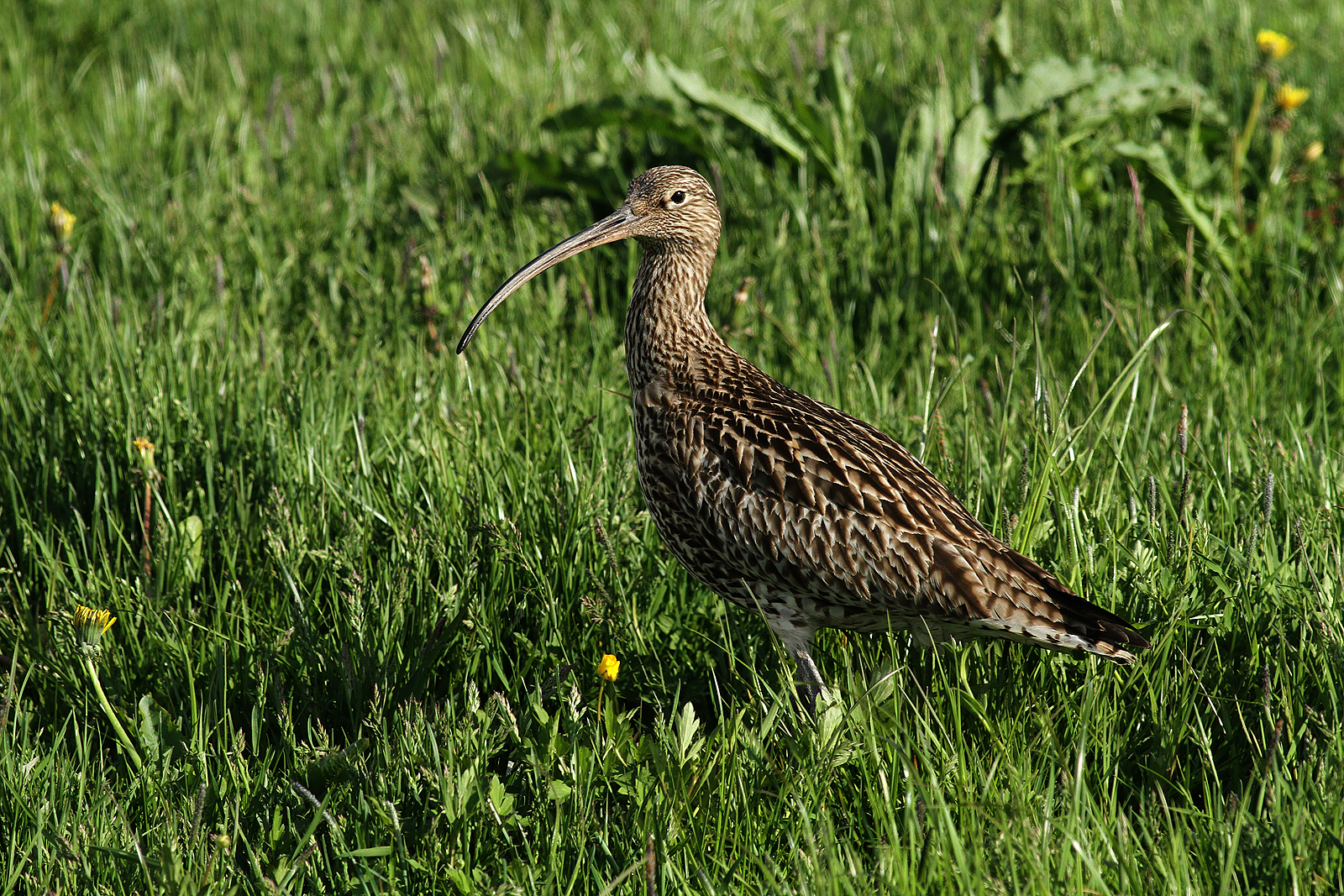
Breeding Curlew at Obrestad


A pair of Curlew (perhaps breeding) was photographed along the secondary road into Obrestad just past the school in a field of grass. They were rather obliging and photos were made from inside a car while parked in the middle of the road. Images were captured using the 400/5.6 lens, the bigger lens proved to unwieldy in the current car ... both size of lens and maneuverability space were main detractors.

Sunday, May 26, 2013

Short waderwatching Telecommunication Museum Naerlande

I didn't get my fill of 10,000 waders while at Tromso, so had to go out again searching for waders this morning.

The day before I was at Tungenes Fyr, Randaberg for a short while. The wind was very strong, the only birds seen hanging around were the gulls and they were having a great time soaring with the coastal gusts. There was also a pair of Common Ringed Plover from last year at their usual nest site.

Today I drove directly to Revtangen via Sola-Olderberg-Vigdel-Bore, noticed a few Common Velvet at the beach in Sola as I was passing by the airport. There weren't anything significant along the way in the fields along the way either.

At Revtangen there were several cars parked at the harbour, the beach was quiet other than a woman walking on the rocky side of the beach with two dogs unleashed. There were no birds at the usual spot except for a gull and two cormorants which were quickly spooked by the two dogs. Two Common Eider were seen playing in the surf on the sandy side of the beach. Other than that I didn't notice any waders. The wind wasn't too strong however the tide was high and there were some moderate wave action. I did not notice anything further out at sea. There have been some sightings of very interesting seabirds the past couple of days at this very spot.

Naerlande

My next stop was the beach at Naerlande just past the Telecommunication Museum. I tried a path along the fields and ended up on a sandy beach. There were several Common Ringed Plover there ... at least 20 and several Dunlin in breeding plumage. I haven't seen one with the black belly patch close up before, the rust orange mantel of summer plumage was very nice in the sun.

The waders were spooked quickly as I moved for a closer shot. At 14 deg C, I was feeling rather chilly in my light summer  pullover ... sunny doesn't mean it's warm in Norway especially if there a breeze.

Oystercatcher / Tjeld / Haematopus ostralegus

Common ringed Plover / Sandlo / Charadrius hiaticula 

Shelduck / Gravand / Tadona tadorna

Arctic Tern / Rodnebbterne / Sterna paradisaea


Dunlin / Myrsnipe / Calidris alpina


On the way back to the parking spot, took a shot of a Shelduck sitting contently on his rock. He's been here the numerous times I've visited this beach. Today there was also a tern, we one a tern as well when I last came here in March with Neil and Inger. This it's resting on a rock was quite happy with itself. I managed a few shots before it flew off. I think it's an Arctic Tern ... the bill clearly does not have a black tip and it has the two long streamers of a tail.

Barnacle Goose / Hvitkinngas / Branta leucopsis 


Nearby the spooked waders earlier had found a spot to forage, I had a second chance at the Dunlin.

Though the sun was starting to come out again, the wind was still blowing moderately. I decided to leave it for now ... will explore the spot again another day. This place is a popular walking area with paths going around all over the place, photography might be a tad challenging.